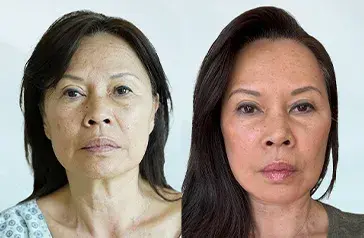




Facelift surgery has become increasingly popular in recent years. Rising costs across European countries have encouraged people to explore more affordable options abroad.
Türkiye has become a hub for cosmetic surgeries. Still, when considering any medical treatment (especially abroad!) there are important factors to keep in mind.
Here, you will find clear and reliable information to help you make the right decision for a safe, successful, and personalized procedure.
What is a Facelift?
A facelift (medically known as rhytidectomy) is a surgical procedure that is designed to reduce signs of aging such as sagging skin and wrinkles on the face. The goal is to move facial tissues back to a youthful position rather than simply stretching the skin sideways.
Why do you need it? Because as we age, gravity wins. Your facial muscles relax, fat pads slip down, and skin loses its snap. Creams and retinol can help the surface, but they cannot lift drooping muscles. That is where surgery steps in to restore your youth. And you might be surprised: people are doing this much sooner than you think.

At a Glance
Who Is a Good Candidate for a Facelift Surgery in Turkey?
Ideal candidates for a facelift are generally healthy individuals with visible jowls or sagging neck skin who have realistic expectations about the outcome. Suitability is determined by skin elasticity and anatomy rather than a specific age, though most patients are between 40 and 60.
| You are likely a good match if: | You should probably reconsider if: |
|---|---|
| You look in the mirror, lift the skin at your jawline, and like what you see. | You are in your early 30s wanting "prevention" (it is too early; you risk scarring for minimal gain). |
| You have "vertical bands" on your neck or distinct jowls. | Your weight goes up and down by more than 5-7 kg regularly. |
| You understand this fixes shape, not skin texture (you will still have pores and sun spots). | You want to fix "tired eyes" only (you need Blepharoplasty, not a facelift). |
| You are a non-smoker (or can quit 4 weeks prior). | You smoke. Studies confirm smokers face a 13-fold higher risk of skin necrosis. You must quit before surgery. |
What We See in Clinic (2024-2025 Data)
Interestingly, our internal patient data shows a shift. While you might think this is a procedure for people in their 60s, the average age of our patients is actually 52. This aligns with global trends reported by the AAFPRS, which show a significant rise in patients under 55 seeking surgical intervention. Why? Because fixing the structure earlier often yields a more natural result than waiting until the skin is severely lax.
Trend Alert: Roughly 65% of the people we treat don't just get a facelift alone. They combine it with a Neck Lift or Fat Grafting because a tight face with a loose neck can look unnatural.
The cost of a facelift in Turkey typically ranges from €3,500 to €9,000, depending on the
complexity of the procedure and any combined surgeries. This all-inclusive package is generally 50-70% lower than
comparable procedures in the UK or US, primarily due to lower economic operational costs. Prices in the UK are much higher. A standard facelift cost in the UK often
falls between £10,000 and £30,000. Why? You pay separately for the hospital,
the
surgeon, and taxes. These are rarely bundled into one price. It's a fair question. The price difference isn't about
cutting corners on medical safety. It comes down to two
things: *Note: The final price depends on whether you add a Neck Lift or Eyelid
surgery
to the session.How Much Does a Facelift Cost in Turkey?
How Much is Face Lift Price in the UK?
Facelift Cost Comparison
Country
Average Price Range (Approx.)
Includes Hotel & Meds?
Türkiye
(Istanbul)
€3,500 – €9,000
Yes (All-Inclusive)
United
Kingdom
£10,000 – £30,000 (€12k – €35k)
No (Usually Surgery Only)
USA
$20,000 – $50,000+
No
Western Europe
(DE/FR)
€12,000 – €20,000
No
Why is it cheaper? Is it safe?
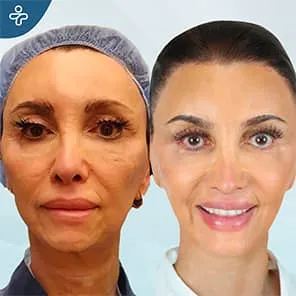
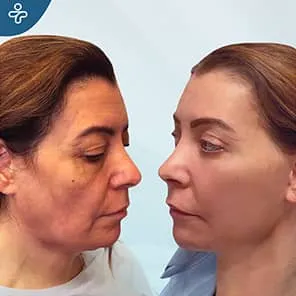
Here, you can see before and after photos of real patients who have had a facelift in Turkey. These photos showcase the results achieved and help you understand what’s possible. Reviewing real cases can assist you in making a more informed and confident decision.
facelift in Turkey Before and After
How to Choose Best Surgeons for Facelift Turkey?
Finding the right surgeon is the most critical step in your journey. Don't get lost in technical terms; focus on these three signs of quality:
- The Credentials: Start with the basics. Ensure your surgeon is board-certified by American Society of Plastic Surgeons (ASPS), International Society of Aesthetic Plastic Surgery (ISAPS) or The European board of plastic reconstructive and aesthetic surgery (EBOPRAS). This guarantees they meet strict safety standards.
- The Technique: Avoid surgeons who simply "pull the skin." That creates the unnatural, windblown look. The best surgeons use Deep Structural Techniques. They rebuild the foundation of your face so the result looks natural, not tight.
- The Proof: Transparency is everything. Don't settle for "after" photos taken immediately after surgery. Ask to see healed results from 12 months later. Getting it right the first time is vital to avoid the need for a revision facelift.
Surgeons
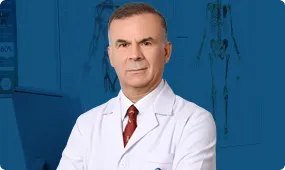
Prof. Dr. Arif Türkmen
One of the first EBOPRAS certificated Turkish surgeon
Your Care in Turkey Journey: Step-by-Step
We know that traveling for surgery can feel overwhelming. That is why we handle every logistical detail, so you can focus entirely on your recovery. Here is exactly what your week in Istanbul will look like:
1. Free Online Consultation (From Home)
You send us your photos. Our surgeons review your case and provide a personalized medical plan and fixed price quote.
2. Arrival & VIP Transfer
You land in Istanbul. Our private driver greets you at the airport and takes you to your 4/5-star hotel to settle in.
3. Face-to-Face Examination
You meet your surgeon in person. We finalize the plan, run standard pre-op blood tests, and prepare you for the next day.
4. Surgery Day
We perform your surgery in our JCI-accredited hospital. You typically stay 1 night in the hospital for close monitoring.
5. Hotel Recovery & Private Nurse Visits
You return to your hotel. Our Personal Nurse visits you in your room for check-ups and dressing changes. No need to travel back to the clinic.
6. Final Check & Return Home
Your surgeon performs a final check-up, clears you for flight, and you head home. We continue with 12 months of online follow-up to monitor your healing.
Why Choose Turkey?
Turkey has become a global hub for medical tourism due to the high volume of specialized cases performed by board-certified surgeons in JCI-accredited hospitals. This environment allows patients to access top-tier medical expertise and comprehensive safety protocols at a significantly lower cost than in Western Europe or the US.
At Care in Turkey, we elevate this standard by ensuring you are never alone during the process:
Accredited Surgeons
You aren't getting a general practitioner; you are getting Board-Certified experts.
Personal Nurse
Most clinics say goodbye at the door. We send a private nurse to your hotel room for check-ups and dressing changes.
Safety Net
Every package includes comprehensive medical travel insurance for your peace of mind.
Don't Let Price Be Your Only Guide
You cannot choose a medical procedure abroad solely because it is "cheap." While Turkey has become a leading health tourism destination, there are also low-quality providers looking to cut corners. Be very careful.
Research your surgeon, vet your medical agent, and health tourism authorization certificate, check the hospital accreditation, and examine real before-and-after photos to be sure about the results of a facelift. Don't risk your health just to find the most affordable solution. Türkiye offers incredible quality, but you must choose a partner who prioritizes safety over offering the lowest bid.
Our knowledge about facial proportions is the secret of our know-how. We examine the particularities of your face and create a greater balance between your unique features. We are not the ones to say that. Our patients are!
Reviews
Disclaimer: The following videos are authentic real patient records and have not been generated by AI.
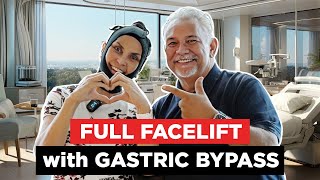
Facelift in Turkey: Patient Story, Plus Gastric Bypass

Facelift & Neck Lift with Dr. Ahmet Hamdi Sakarya
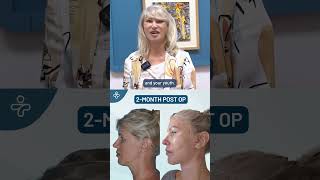
Early Facelift Results - Italian Patient
Real Facelift Results | Happy Patient
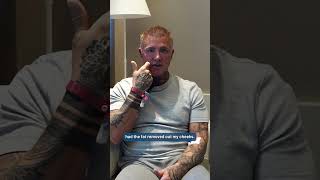
He Came Back Looking Incredible 🔥
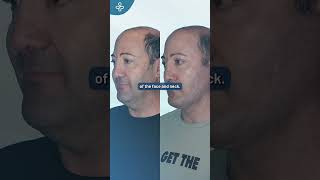
Happy Patient Returns: Facelift to Rhinoplasty
How is a Facelift Procedure Done?
The standard operation starts with anesthesia. Then incisions are made along the hairline and ear contours, lifting the deep muscle layers, removing excess skin, and closing the incisions with fine sutures.
While techniques vary, at Care in Turkey we strictly follow the safety protocols outlined by major bodies like the American Society of Plastic Surgeons:
- Anesthesia: We place you under general anesthesia so you sleep completely deeply and feel absolutely no pain.
- The Incision: We start the incision in the hairline at the temples, continue around the ear, and end in the lower scalp. This smart placement hides future facelift scars.
- Deep Layer Work (The Critical Step): The surgeon lifts the skin to access the SMAS layer underneath. We tighten and reposition this muscle layer to correct jowls and neck sagging.
- Redraping & Closure: We lay the skin back over the newly lifted contours. We trim away excess skin without tension and close the incisions with fine sutures.
What Are the Different Facelift Techniques?
There are several facelift techniques tailored to your specific needs. There are advanced facelift techniques as well as less invasive types. Your surgeon will recommend the suitable method based on your level of sagging and your anatomical goals.
Most Popular Types of Facelift:
1. Deep Plane Facelift (The Gold Standard)
This is the most detailed and thorough procedure we perform. During a Deep Plane Facelift in Turkey, your surgeon lifts and repositions the muscles and tissues to create a youthful appearance. A 2025 systematic review confirmed that Deep Plane techniques yield significantly higher patient satisfaction rates (94.4%) compared to standard lifts, largely due to longevity and natural movement.
2. SMAS Facelift
The SMAS Facelift typically focuses on the deeper layer of the face called the Superficial Musculo-Aponeurotic System (SMAS). By lifting and repositioning this foundational tissue, it provides a natural and enduring fresh look, specifically fighting sagging and age-related changes in the lower face.
3. Extended High SMAS Facelift
Think of this as the "advanced" version of the standard lift. The Extended High SMAS Facelift targets the deeper SMAS layer but extends the lift higher up. It offers very natural-looking results and is particularly effective at tackling significant sagging, deep wrinkles, and heavy jowls.
4. Mini Facelift
The Mini Facelift is a minimally invasive procedure targeting the lower portion of the face; rather than a full facelift which addresses excess fat and sagging skin in the face and neck areas. It involves shorter incisions and less tissue repositioning, resulting in a quicker recovery time.
Note: While many patients request mini facelift in Turkey for the cost or shorter recovery period, it is often not suitable if you have significant skin laxity in the neck.
5. One Stitch Facelift
The One Stitch Facelift is a quick, low-downtime procedure. It uses a single hidden suture to lift the mid-face. This is perfect for fixing early signs of aging without major surgery.
LESS INVASIVE & NON-SURGICAL OPTIONS
If you aren't ready for a traditional lift, we suggest minimally invasive treatments including the Scarless Facelift, Non-Surgical 8 Point Facelift, dermal fillers, and the Liquid Facelift. Ask our doctors if these might be a solution for you.
Book a Free Consultation Now!
You can contact us immediately and take the first step in your face lift surgery journey by scheduling a free consultation with our surgeon.
How Long Does Facelift Recovery Take?
Most patients require approximately two weeks of initial downtime, during which swelling and bruising are most visible. While you can usually return to work and social activities after 14 days, complete healing and the final settling of results can take several months. You can read our detailed facelift recovery time guide for day-by-day expectations.
Facelift Recovery Timeline
- Days 1-3 (The "Tight" Phase): You will have bandages and possibly drains. Swelling peaks now. You might feel "regret" due to the bruising. Medical literature identifies this as a common form of transient post-surgical regret. It is temporary, it is hormonal, and it passes.
- Day 5-7: The turning point. Stitches (if non-dissolvable) are removed. Drains are out. You can shower properly.
- Day 10-14: Socially acceptable. Most patients feel okay going to dinner with concealer/makeup. You can fly home safely.
- Month 2-3: Numbness fades. The "wooden" feeling in your cheeks starts to disappear as nerves regenerate.
What should you do or avoid during aftercare?
We will provide you with detailed information regarding all aftercare processes following the operation. Following your doctor's advice during the aftercare process is important to recover quickly.
- Do: Keep your head elevated at a 45-degree angle, even while sleeping, to reduce swelling.
- Do: Use cold compresses for the first 48 hours to minimize bruising.
- Avoid: Smoking or being around smoke, as it delays healing and risks skin necrosis.
- Avoid: Strenuous exercise, heavy lifting, or bending over for at least 4 weeks.
- Avoid: Direct sun exposure on the incisions for 6 months to prevent dark scars.
What are the Risks?
The surgery is generally safe, but like any medical procedure, it comes with potential risks. Most complications are minor and temporary, but you need to be fully informed before making a decision.
- Hematoma: A small collection of blood under the skin. This is the most common complication but is easily treated by your surgeon.
- Infection: This is very rare because we provide antibiotics, but it is a risk with any incision.
- Nerve Injury: You might feel temporary numbness or weakness. Permanent damage is extremely rare with experienced surgeons.
- Scarring: While incisions are hidden in the hairline, healing depends on your genetics (and if you smoke!).
- Hair Loss: You might see temporary thinning near the incision sites, but it usually grows back within a few months.
Which Operations Can Be Combined With Facelift?
It is frequently combined with other facial procedures to ensure a harmonious result. Since a facelift addresses the mid-to-lower face and jawline, performing complementary surgeries in the same session prevents the "mismatched" appearance where one part of the face looks youthful while another looks aged.
The most common combinations include:
- Neck Lift (Platysmaplasty): This is the most common partner procedure. It is the best way to get rid of turkey neck and vertical bands, ensuring the rejuvenated jawline matches the neck contour.
- Blepharoplasty (Eyelid Surgery): A facelift stops at the cheekbones. Adding eyelid surgery corrects hooded upper lids or puffy under-eye bags.
- Fat Grafting: Using your own fat to restore volume adds a soft, youthful fullness that lifting alone cannot achieve.
- Brow Lift: For patients with a heavy or drooping brow, lifting the forehead opens up the eyes and completes the rejuvenation of the upper third of the face, similar to a temporal lift or a forehead lift.
Prof. Dr. Arif Türkmen was born in the İslahiye district of Gaziantep and completed his primary, secondary, and high school education there. In 1981, he received the Atatürk 100th Anniversary Award.
In 2002, he became the first Turkish Plastic Surgeon to pass the European Board of Plastic Surgery examination (EBOPRAS).
In 2005, he received the gold medal as the best candidate in the European Federation of Hand Surgery examination.
Frequently Asked Questions
Ask the ExpertThere is no specific best age. Instead, the decision to undergo should be based on a variety of factors, including the patient’s overall health, skin condition, and individual goals.
Free Consultation
Free Consultation
Related Treatment
Explore our other treatments

Related Articles
Menu
Language

WhatsApp Contact
Online