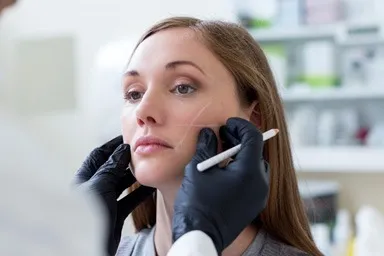
A full face lift in Turkey now costs £4,900 to £5,800, compared with £12,000 to £20,000 in the UK, which represents a saving of 60 to 70 per cent. This price difference means more patients are booking facelifts abroad in 2026. In this piece, we explain the full face lift procedure, realistic price ranges, and the factors that can raise or lower the cost. We also cover full face lift before and after expectations and answer the common question: how long does a full face lift last? Results typically last 10 to 15 years[6].
What Does a Full Face Lift Procedure Include?
Before comparing prices, it helps to know what happens during surgery. A full face lift procedure is not one standard operation. It covers several techniques that a surgeon adapts to your bone structure, skin elasticity and the areas you want to improve.
Which areas of the face and neck are treated?
A full face lift procedure usually treats the lower two-thirds of the face, including sagging cheeks, jowls along the jawline, deep folds between the nose and mouth, and loose neck skin. The surgeon makes incisions above the hairline at the temples and extends them in front of the ear, beneath the earlobe and into the lower scalp. Surgery may also require an incision under the chin if it includes the neck[7].
The surgeon lifts the skin, tightens the underlying muscle and connective tissue, and repositions or removes fat. They then redrape the skin and trim away any excess[7]. A standard procedure takes 3 to 6 hours under general anesthetic, although it can take longer with additional procedures. Full facelift surgery with extensive neck rejuvenation can last more than four hours. A skin-only mini facelift may take as little as two hours and can sometimes use local anesthetic.
Why brow and eyelid surgery may cost extra
A facelift tightens the area below the eyes. Sagging eyebrows and forehead wrinkles need a separate browlift[3]. Facelifts also do not treat fine lines, sun damage, or creases around the nose and upper lip. Clinics therefore list blepharoplasty, or eyelid surgery, and brow lifts as add-ons instead of including them in the base price.
The difference in cost is clear. A SMAS facelift with a neck lift starts from £13,700, while upper blepharoplasty increases the package price to £16,200. The added cost reflects extra surgical time and separate incision sites. Mini facelifts follow the same pattern, with upper blepharoplasty raising the starting price from about £7,500 to £10,000.
Deep plane, SMAS and mini facelifts: key differences
| Technique | What's lifted | Best suited for | Typical longevity |
|---|---|---|---|
| Mini facelift | Skin and limited tissue in the lower face | Early sagging, younger patients and faster recovery | Shorter than SMAS |
| SMAS facelift | Muscular SMAS layer plus skin | Moderate to more advanced jowling and neck laxity | 10 years or more |
| Deep plane facelift | SMAS, fat and skin lifted as one unit | Heavier facial structure, thicker skin and revision cases | Can last longer than SMAS |
The deep plane approach is technically more demanding. It requires a surgeon with experience working in that plane, which can also affect the price. Mid-facelifts, in comparison, focus on repositioning cheek fat rather than treating the entire lower face.
Who is a suitable candidate?
Suitable candidates are usually healthy, do not smoke, and have realistic expectations about surgery's results[8]. Most patients are in their 40s and 60s, although people in their 70s or 80s can still achieve good results if they have strong bone structure and their skin retains some elasticity[3].
Age is not a strict cutoff. Patients as young as 40, and occasionally younger, may qualify based on their skin quality. Major weight fluctuations can affect how well results last over time, so surgeons often discuss this during the consultation.
Full Face Lift Price in Turkey in 2026
Once you know which technique suits your face, the next question is what it will cost in 2026. The honest answer depends on where you look and what the quoted price includes.
Typical price ranges in Turkey compared with the UK and US
Clinics' own price lists show that a facelift in Turkey costs £2,819 to £3,917, compared with £10,000 to £17,500 in the UK. Midpoint comparisons suggest a saving of about 75%. Complete deep plane packages cost £4,900 to £5,800 in Turkey, compared with £12,000 to £20,000 in the UK, £11,912.40 to £19,854.00 in the US, CAD 18,000 to CAD 30,000 in Canada, and AUD 20,000 to AUD 35,000 in Australia. Savings generally range from 55% to 70%.
| Country | Typical range |
|---|---|
| Turkey | £2,819 - £5,800 |
| UK | £10,000 - £20,000 |
| US | £5,956 - £19,854 |
How technique and surgeon experience affect the cost
Surgical time accounts for much of the price difference between techniques. A mini lift costs less because it takes less time and often uses sedation. A SMAS lift falls in the middle, while deep plane surgery costs more because it involves additional dissection and specialist skill. Istanbul clinics that offer deep plane surgery charge roughly £3,591 to £6,630 for treatment only. Prices depend on the hospital setting, whether the package includes a neck lift, and the surgeon's seniority.
What surgery packages include and exclude
A typical package covers the surgeon's and anesthetist's fees, hospital charges, pre-operative tests, and post-op medication and dressings. It also includes 3-5 hotel nights, airport transfers, coordinator support, and follow-ups during your stay. Flights and longer hotel stays are usually excluded. Clinics also often exclude treatment for complications after you return home, along with revision surgery unless the written terms state otherwise.
Extra costs for flights, longer stays and follow-up care
Most programs require you to stay in Turkey for 7 to 10 days. Combined procedures, like eyelid surgery or fat grafting, may require a longer stay. The NHS advises against flying for 7 to 10 days after facial cosmetic procedures because of clot risk[4]. Larger combined operations can extend the stay to 10-14 days. Follow-up care usually continues remotely through photo reviews at set intervals after you return home.
How to compare itemized quotes for the same treatment
Keep the clinical plan separate from the travel arrangements. You should also have the treatment plan, itemized quotation, and terms covering any changes available. Check that every quote includes the surgeon's fee, anesthetist's fee, hospital facility charge, pre-op tests, garments, follow-up appointments, and a written revision policy before you compare total costs.
How to Plan Safer Surgery in Turkey
Picking a destination and technique is only half the decision. You also need to choose the surgeon and surgical setting. A few checks before booking can mean the difference between a straightforward recovery and a complicated one.
Check the surgeon's credentials and facelift experience
Ask for the certifying board's name instead of accepting a vague title such as "esthetic doctor." Turkey registers genuine specialist status with the Ministry of Health and the Turkish Medical Association, and you can independently verify membership in the Turkish Society of Plastic, Reconstructive and Esthetic Surgery[1]. You can also verify a surgeon's published research, textbooks and course history through PubMed, publisher listings and course programs. This gives you evidence beyond marketing claims. Ask directly for the hospital's name. A clinic that hesitates to confirm where surgery takes place answers an important question itself. For deep plane work, ask about board certification, hospital privileges and case volume for that specific technique rather than a general lifetime procedure count.
Verify the hospital's license and emergency support
A government license shows that a hospital has passed inspections of its surgical facilities, staffing, infection control and emergency preparedness. The license also requires ongoing re-inspection rather than one-time approval. Turkish law has required medical tourism providers to hold complication insurance for international patients since January 2026. The insurance covers corrective treatment if something goes wrong.
Discuss bleeding, infection, nerve injury and healing risks
Hematoma is the most common complication that requires a return to theater, with an incidence of around 1.8-1.97% in large reviews[5]. Infection that requires hospitalization occurs in fewer than 1% of cases, at roughly 0.18-0.89% depending on the study[5]. Temporary nerve weakness varies by technique. The great auricular nerve is injured in up to 7% of cases, though it usually recovers within a year[5].
Review medicines, nicotine use and pre-surgery tests
Active smokers are nearly 12.5 times more likely to suffer skin slough after a facelift. Clinics recommend stopping smoking four to six weeks before surgery. Aspirin, NSAIDs and anticoagulants increase bleeding risk. Aspirin use nearly doubles hematoma rates, even when patients stop taking it a week early[5].
Confirm aftercare, complication costs and revision terms
Ask whether the written quote explains what happens and what it costs if you need treatment for a complication or revision after flying home.
Arrange a travel companion and suitable insurance
Standard travel insurance does not cover planned treatment. Specialist medical-travel policies are available for facelift patients and cover complications and companion travel.
Full Face Lift Recovery: From Surgery to Flying Home
After the paperwork and consultations are complete, the clinical experience follows a fairly predictable timeline. It begins in the operating room and continues well after you fly home.
Surgery day: anesthesia, incisions and hospital stay
Most full face lift procedures use total intravenous anesthesia or a general anesthetic. A standard lift takes two to four hours, while combined procedures can last three to six hours. The surgeon marks the face beforehand and places incisions along the hairline at the temples, in front of the ear, around the earlobe and into the lower scalp. A separate incision under the chin may be needed if the neck is treated. Small drains are often placed behind the ears to remove blood and fluid. They usually come out within a day or two. Many clinics discharge patients on the same day if a companion can stay with them for the first 24 hours. Some surgeons keep patients in hospital for two nights and check them each day before discharge.
Days 1–7: swelling, bruising, dressings and follow-up checks
The first night is often the hardest. Patients usually need the most pain medication on day one, and surgeons often schedule a follow-up visit around day two to change dressings and inspect the incisions[2]. Swelling and bruising increase during the first two to four days before they begin to settle. The face may look uneven or flushed during this period, which is expected and does not usually signal a problem. Clinics often replace the facial bandage with a stretchy compression garment on day two or three. Stitches in front of the ear usually come out after one week, and bruising often turns yellow or green at that point. Numbness around the cheeks and ears is normal and may take months to resolve fully.
Weeks 2–6: returning to work, exercise and travel
Most patients feel ready to return to work after about two weeks. Some prefer to stay home for another week or two until the bruising has faded. Driving can usually resume once you can turn your neck comfortably and no longer need pain medication, often after about two weeks. Patients can take walks of up to 30 minutes during the first three weeks. Light yoga or cycling may begin between weeks three and four, while a full gym routine can resume by week six if the surgeon approves. Swelling and bruising usually settle within four to six weeks, though the final result may take six months to a year to appear.
Warning signs that need urgent medical care
Contact the surgical team straight away for any of the following:
- Swelling that is sudden, painful or clearly worse on one side
- Bleeding that won't stop with gentle pressure
- Pain that is worsening rather than easing
- A temperature above 38°C, or spreading redness and discharge
- Dark or blistered skin near an incision, or new facial weakness
Chest pain or difficulty breathing needs emergency care without delay.
Full Face Lift Before and After: What to Expect
Judging results fairly starts with the photos, not just the surgery.
How to assess photos with matching angles and lighting
Look for two light sources instead of one. A single light can cast shadows that exaggerate hollows in "before" photos and make "after" skin look smoother. Check that both ears appear in frontal shots because wide-angle lenses can widen the face and distort proportions. Head tilt, expression, and makeup should also match between photos. Credible surgeons show images taken six months to a year after surgery, not only weeks later, because swelling can still hide the final shape early on.
At the time swelling settles and final results become clear
Early tightness usually improves within six weeks, but you can only judge the true outcome after six to nine months[3].
What a facelift cannot change
A facelift does not treat fine lines, forehead wrinkles, or skin texture. Those concerns need separate treatments, such as peels or resurfacing[3].
How long does a full face lift last?
Most patients retain noticeable improvement for 10 to 15 years. Some techniques can last up to 12 to 15 years.
How aging, sun exposure and weight changes affect results
Smoking and sun exposure can cause results to fade sooner. Weight swings can have the same effect, beyond what genetics alone determines.
Conclusion
Choosing a full face lift abroad means weighing potential savings against safety. Turkey's prices, roughly £2,800 to £5,800, compared with £10,000 to £20,000 in the UK, can offer real value, especially when packages cover surgeon fees and hospital stays, along with aftercare. Still, the lowest quote is not always the best choice. Check credentials, hospital licensing and revision terms before booking.
Recovery also takes patience, as final results may not appear for six to nine months. A carefully researched surgeon and clinic give patients the best chance of results that last 10 to 15 years, which can make the experience worthwhile.
FAQs
Q1. How much does a full facelift cost in Turkey in 2026?
Prices typically range from about £2,800 to £5,800, with complete deep plane packages commonly costing £4,900–£5,800. The technique, surgeon’s experience and package inclusions affect the total.
Q2. Does a full facelift include the neck, eyelids and forehead?
A full facelift mainly treats sagging cheeks, jowls and the lower face, often including the neck. Eyelid surgery and brow lifts are separate procedures, so confirm exactly what your quote covers.
Q3. How long should I stay in Turkey after a facelift?
Plan for around 7–10 days, or 10–14 days for combined procedures. Your surgeon should confirm when you are fit to fly based on your recovery.
Q4. How long does recovery from a full facelift take?
Most people return to work after about two weeks. Swelling and bruising usually improve within four to six weeks, while final results can take six months to a year to settle.
Q5. How long do full facelift results usually last?
Meaningful improvement typically lasts 10–15 years, although aging continues. Smoking, sun exposure and significant weight changes can make results fade faster.
References
- https://turkplasticsurgery.org/?p=checklist
- https://www.plasticsurgery.org/news/blog/your-facelift-recovery-explained-from-day-1-to-day-30
- https://baaps.org.uk/patients/procedures/12/facelift_and_necklift
- https://www.nhs.uk/tests-and-treatments/cosmetic-procedures/advice/cosmetic-surgery-abroad/
- https://pmc.ncbi.nlm.nih.gov/articles/PMC8240741/
- https://www.theguardian.com/wellness/2025/jun/27/what-is-a-deep-plane-facelift
- https://www.nhs.uk/tests-and-treatments/cosmetic-procedures/cosmetic-surgery/facelift/
- https://www.plasticsurgery.org/cosmetic-procedures/facelift/candidates